

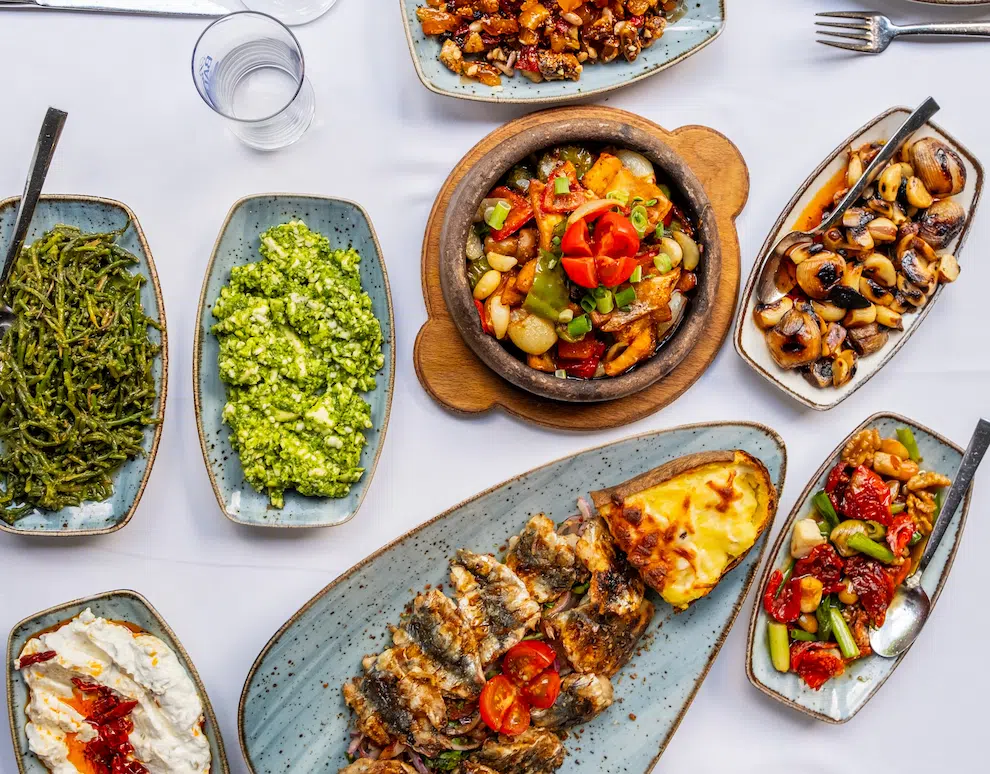
Ayvalık and Cunda cuisines are rich in flavors inspired by the deep blue waters and olive groves of the Aegean. Although these two neighbors share the same sea, their culinary traditions have distinctive differences. Let’s take a closer look at what sets apart the cuisines of these two Aegean gems.
Characteristics of Ayvalık Cuisine
When you hear the name Ayvalık, the first thing that comes to mind is undoubtedly olives and olive oil. In fact, Ayvalık’s cuisine is built entirely around this liquid gold. Ayvalık faces not only the sea but also the Kaz Mountains, which bless its tables with an incredible variety of herbs. These herbs define both the flavor and the healthy character of Ayvalık’s dishes.
To understand Ayvalık’s culinary character, one must look back to the population exchange period. When settlers from Crete arrived in Ayvalık, they enriched its food culture tremendously. Cretan cuisine is known for its simplicity and mastery in the use of seafood and herbs — a mastery that blended perfectly with Ayvalık’s local flavors.
While seafood is important everywhere, in Ayvalık, herbs and olive oil–based dishes take center stage. One of the most famous delicacies is papalina, a small fish that is floured and fried in olive oil and eaten whole, without removing the bones. Desserts made with curd cheese (lor) and mastic cookies are also among Ayvalık’s signature flavors. In short, Ayvalık’s cuisine is a deep-rooted blend of the land’s bounty and Cretan heritage, all brought together by olive oil.
Distinctive Aspects of Cunda Cuisine
Cunda Island, surrounded by the sea on all sides, reflects this advantage beautifully in its cuisine. Life on the island revolves around the sea’s abundance. Octopus, calamari, shrimp, and many kinds of fish are the stars of the table. Compared to Ayvalık, Cunda’s seafood dishes are prepared in a more refined, sophisticated way.
Grilled sun-dried octopus, wine-marinated fish, and a wide variety of seafood meze are the island’s hallmarks.
Key Differences Between Ayvalık and Cunda Cuisines
Although both belong to the Aegean culinary tradition, here are the main differences that distinguish these two culinary destinations:
- Ayvalık is nourished by the fertile lands of the Kaz Mountains, making herbs and land-based ingredients more prominent in its cuisine. Cunda, on the other hand, being an island, is entirely sea-oriented; seafood lies at the heart of its culinary identity.
• When you think of Ayvalık, papalina fish, olive oil–based herb dishes, and curd cheese come to mind; whereas Cunda evokes images of grilled octopus, seafood meze, and mastic-flavored delicacies.
• Ayvalık’s cuisine emphasizes simplicity and the fresh taste of herbs, while Cunda’s cuisine stands out for its rich, elegant, and seafood-centered sophistication.
Healthy, Delicious, and Natural Tables
Whether inspired by Ayvalık or Cunda, the essence of Aegean cuisine lies in health, freshness, and flavor. Tables are set with generous olive oil, fresh greens, seasonal fish, and minimally processed ingredients — offering the perfect answer to today’s pursuit of healthy living.
Ayvalık and Cunda Flavors at Park Balık Restaurant
You don’t need to travel miles to experience the serene atmosphere of the Aegean. In Ümraniye, Istanbul, Park Balık Restaurant brings you the most authentic tastes of Ayvalık and Cunda, far from the city’s chaos. Every appetizer and main course on the menu carries the essence of the Aegean’s fertile lands and deep blue seas.
Park Balık’s master chefs use the freshest seasonal herbs, daily seafood, and the finest olive oil to serve you the simplicity of Ayvalık and the elegance of Cunda — all under one roof.
To experience the Aegean’s famous hospitality and culinary heritage right in Istanbul, you’re warmly invited to Park Balık.
Contact Information:
Phone: +90 (216) 594 12 01
Address: Madenler Mah. Şehit Ünal Kalafat Cad. Eltes Gold Residence No: 32/19 Ümraniye – Istanbul
